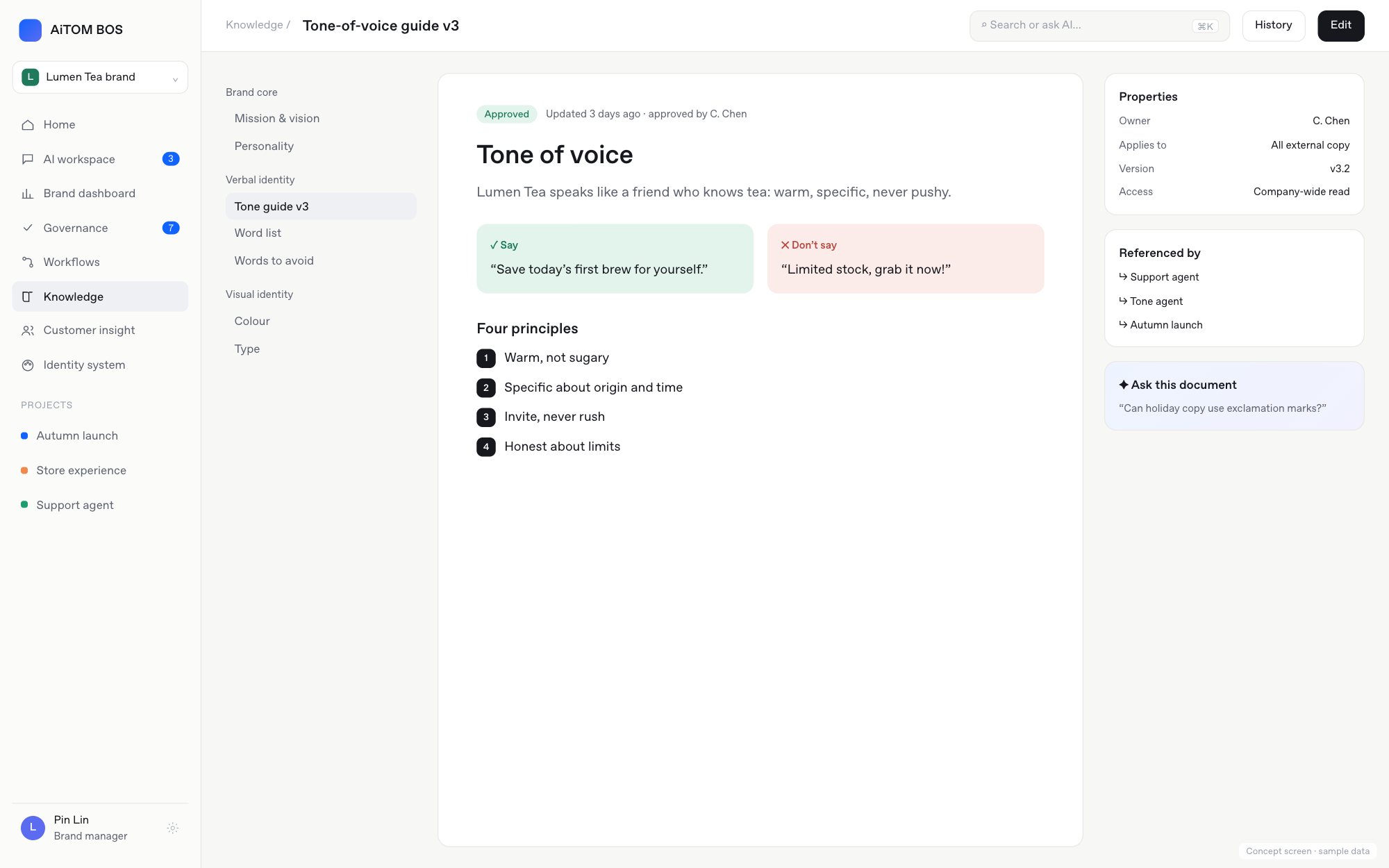
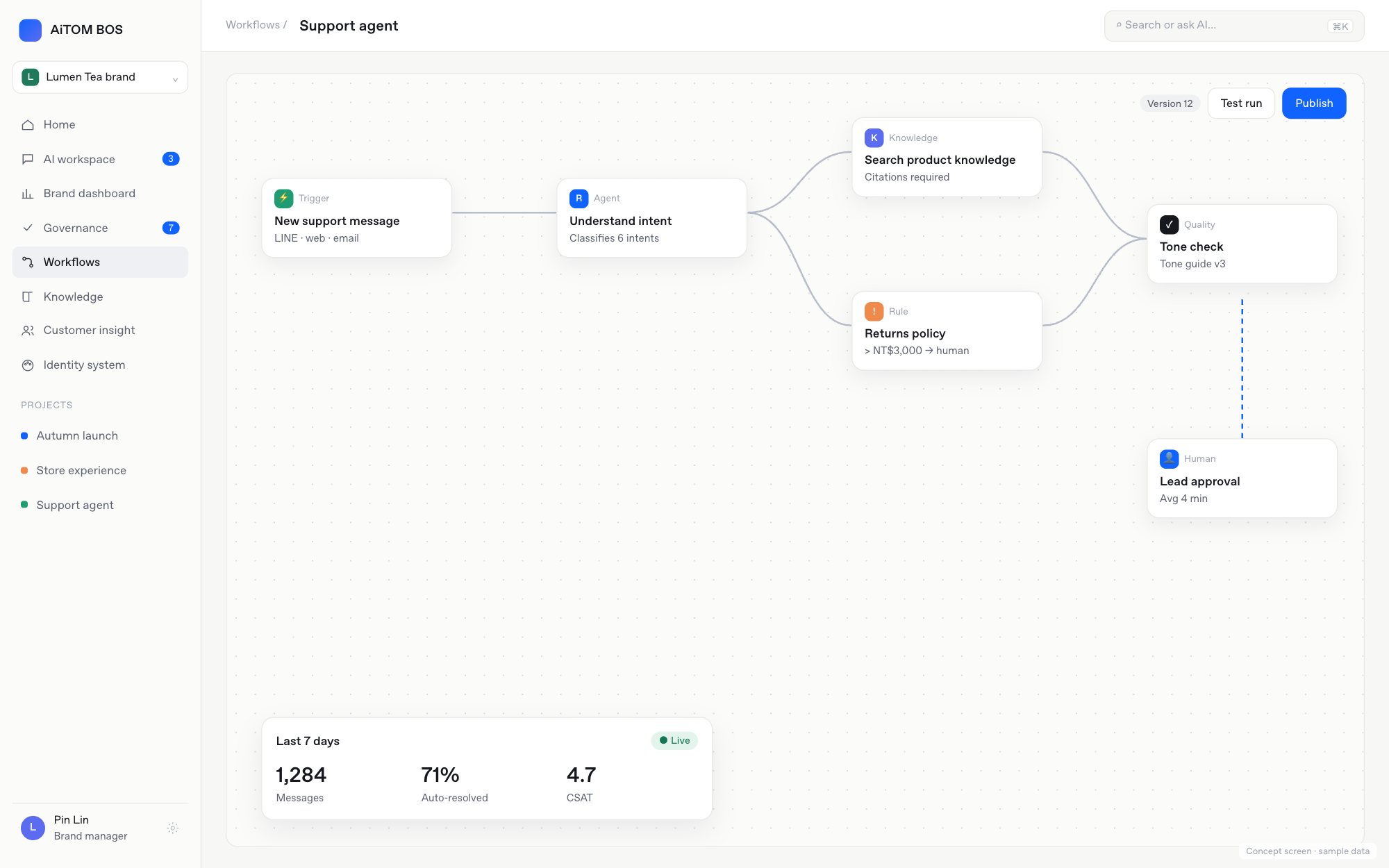
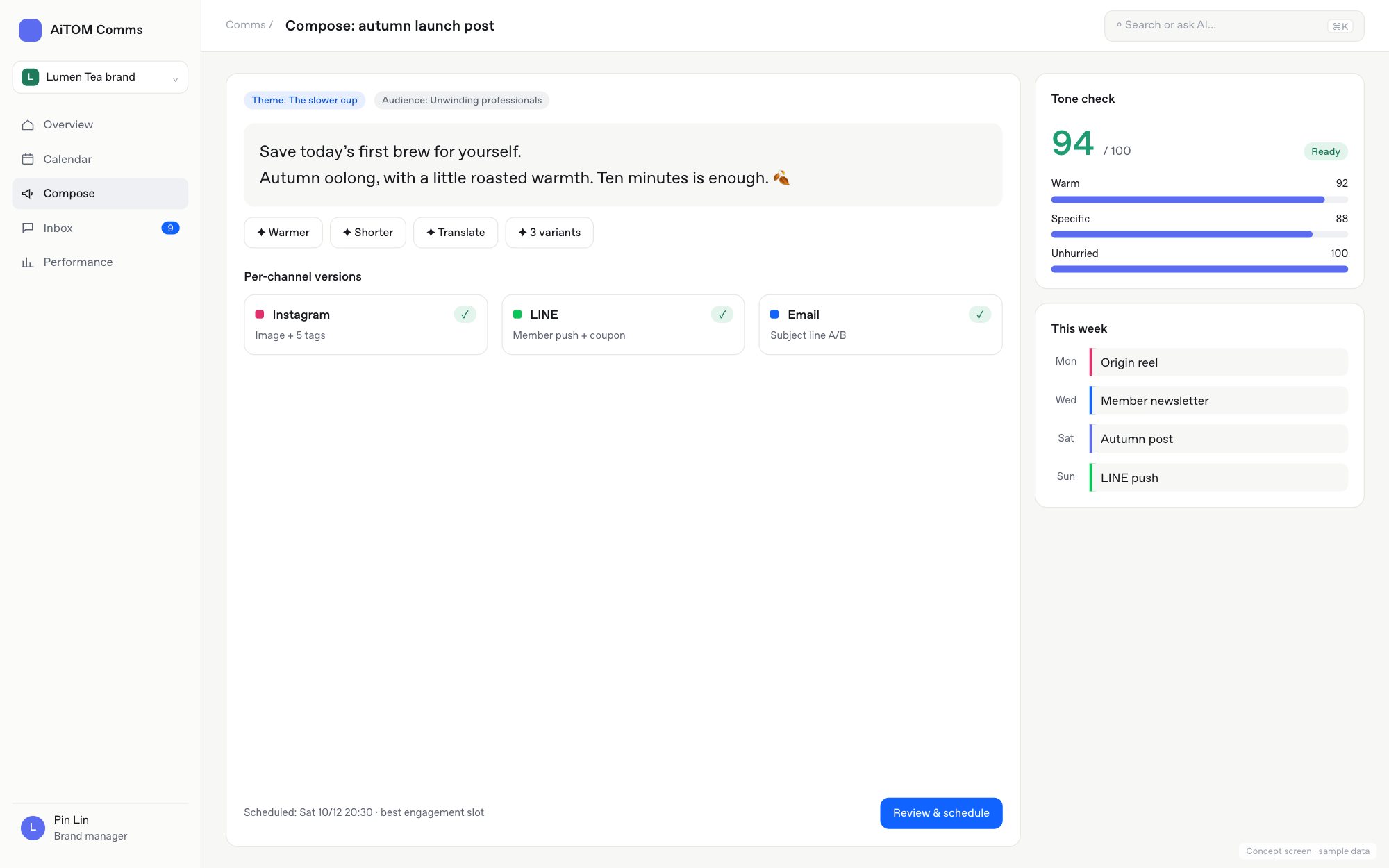
Say the brand clearly again, starting from need
we started from need and strengths to state our own positioning clearly, then carried it into brand language and visuals.
- Customer
- AiTOM (our own practice)
- Topic
- Brand growth
- What we did
- Brand strategy and messaging
Key points
- Positioning is "AI Transformation & Brand Growth": AI transformation as the future track, brand growth as the track of strength.
- Brand line (in Chinese): "Start from insight, make every step count." Blue is the primary colour.
- Facts, observations and assumptions are separated and dated, so positioning rests on evidence.
Stating a client's brand clearly is our craft. Stating our own is the thing most easily postponed. AiTOM helps companies with AI transformation and brand growth, and we faced an honest question ourselves: who are we, what do we mainly do now, and where do we want to go? Rather than offering a polished story outward, we decided to ask the question again from scratch, using our own method.
Where we started
The starting point was not a glossy deck but a few facts we had not yet said plainly. We have strengths built up in brand work, and we have an AI direction that is still developing. Both are real, but in outward-facing language they were often mixed together, and a reader could not tell which was the lead. Another problem: in positioning talks it is easy to treat "what we hope to be" as "what we already are", so assumptions and facts get tangled.
So we set ourselves a rule: sort the material into facts, observations and assumptions first, with a source and date on each, and only then discuss positioning. It looks slower, but it removed a lot of back-and-forth later.
What we did
We treated positioning as a decision to be broken down, not a flash of inspiration. The flow was roughly this:
- Take stock: list existing cases, capabilities and market observations, and mark which are verified facts and which are only our assumptions.
- Start from need: ask "who needs what" before "what do we want to say". Positioning has to match real demand.
- Lay out options and trade-offs, with AI helping organise and compare, and the director deciding. AI drafts; people decide.
- Record the outcome as a numbered decision record with the reasoning and date, so later changes can be traced.
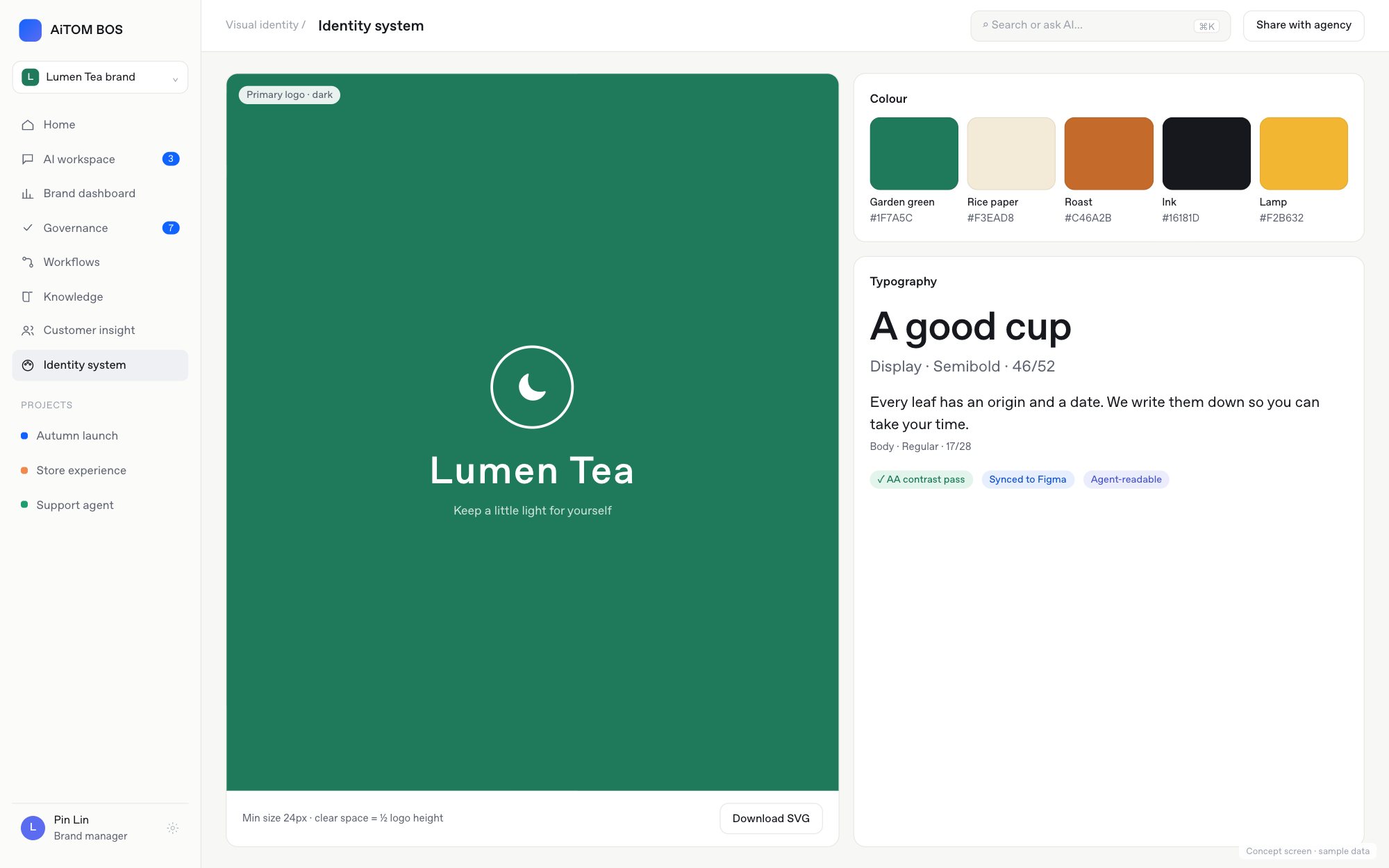
- Turn positioning into brand language and visuals: settle one brand line and build a visual identity with blue as the primary colour.
The result: we set our positioning as "AI Transformation & Brand Growth". AI transformation is our main future track; brand growth is the track we are already strong in. The wording admits both things. It does not pretend the brand strength is absent, and it does not describe the growing AI direction as bigger than it is today.
For the brand line we chose, in Chinese, "從洞察出發,每一步都算數。" (start from insight, make every step count). It is not a slogan so much as a description of how we work: begin from data and observation rather than instinct, and be able to say why behind every decision and deliverable. Visually, blue is the primary colour, with clear hierarchy and white space so information reads easily.
What went wrong and what we changed
The first problem was AI drafts that were too smooth. Early positioning write-ups read well but often lacked sources and tended to state assumptions like facts. We now require every claim in a positioning document to carry a source and date, and anything without one is labelled an assumption to be verified.
The second was visual direction. We once tried a visual effect that the director, on seeing it, judged out of keeping with the brand. Because we keep every version, it was reverted cleanly, with no residue and no need to redo other parts. That made us more convinced that keeping history matters more than getting it right the first time.
The third was scope. When adjusting brand wording, we found that regenerating everything could quietly rewrite pages unrelated to the change. We now limit the scope of each change and check the differences before release.
What changed
The biggest change is that we have a sentence to check against. When we discuss a new collaboration, new content or a new page, we can ask: does this support AI transformation and brand growth? Does it start from insight? The basis for discussion moves from personal taste to principles that can be checked.
Outwardly we do not need numbers to prove anything. The honest version is this: the positioning is easier to explain, the website and articles share a common axis, and new content points in a more consistent direction.
What you can reuse
- Organise the material first: separate facts, observations and assumptions, with sources and dates, then talk positioning.
- Start from need, not from what you want to say.
- Write positioning as a numbered, dated decision with its reasoning, so later changes have a basis.
- Let AI organise and compare options, and let the owner make the final decision.
- Keep every version. A rejected direction should be reverted cleanly, not overwritten.
- Turn positioning into one brand line and a small set of visual rules so everyone speaks the same language.
Start from insight. Make every step count.