Organize projects and delivery
Give requirements, execution, verification and delivery clear records.
Projects rarely go wrong because nobody tried. They go wrong because the record is unclear: requirements changed in conversation, decisions sit in chat threads, and only at delivery does it turn out the two sides understood different things. With AI joining the work this gets worse — AI produces quickly, but without a record nobody knows which version was confirmed.
Organizing projects and delivery means every step leaves a trace of who decided what, and when, and that drafts, verification, approval and delivery are kept separate.
You may be seeing this
- Requirements change midway, and later nobody can say who agreed.
- Gaps or wrong directions are found only just before delivery.
- When a project ends its lessons disappear, and the next one starts from zero.
- People and AI both produce work, and it is hard to tell what has been confirmed.
How we approach it
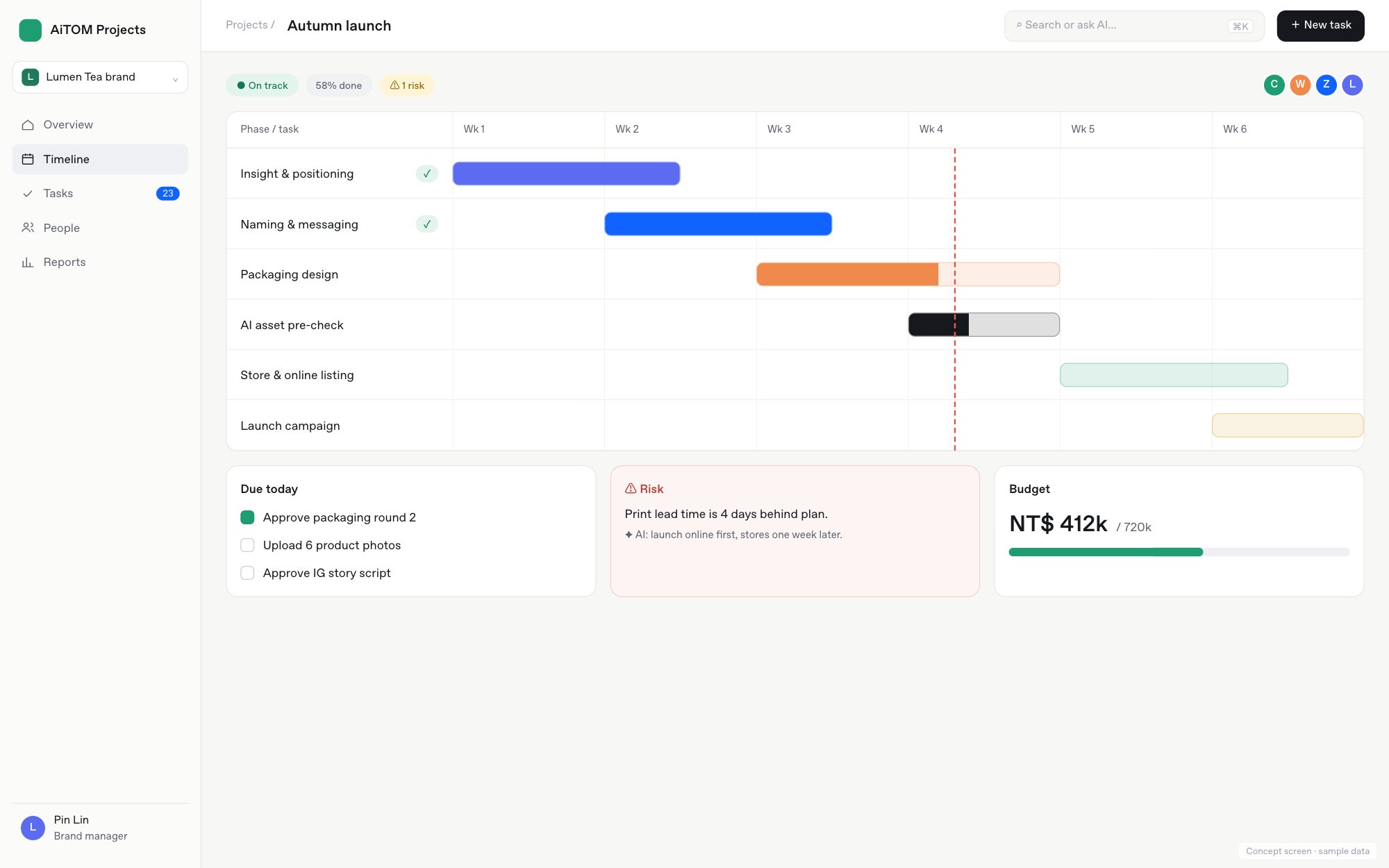
- Set scope: before starting, write down goals, scope, what is out of scope and how work will be accepted.
- Break down the work: split the project into trackable items, each with an owner and a definition of done.
- Separate states: mark drafts, pending verification, approved and delivered, so a draft is never taken as final.
- Record decisions: write down important changes and decisions with date, reason and decision-maker.
- Look back: after delivery, note what worked and what to change, and turn it into practice for next time.
What you get
- Templates for scope and acceptance criteria.
- A work tree and status rules.
- Formats for decision and change records.
- An approval flow for work produced by people and AI.
- A project review template.
How to tell it works
Look during and after projects: can every change be traced to its basis, are there fewer surprises at delivery, and can the next project reuse what was learned?
Clear records make every delivery the starting point for the next one.